
Cristocef Syrup for Urinary & Kidney Wellness Support
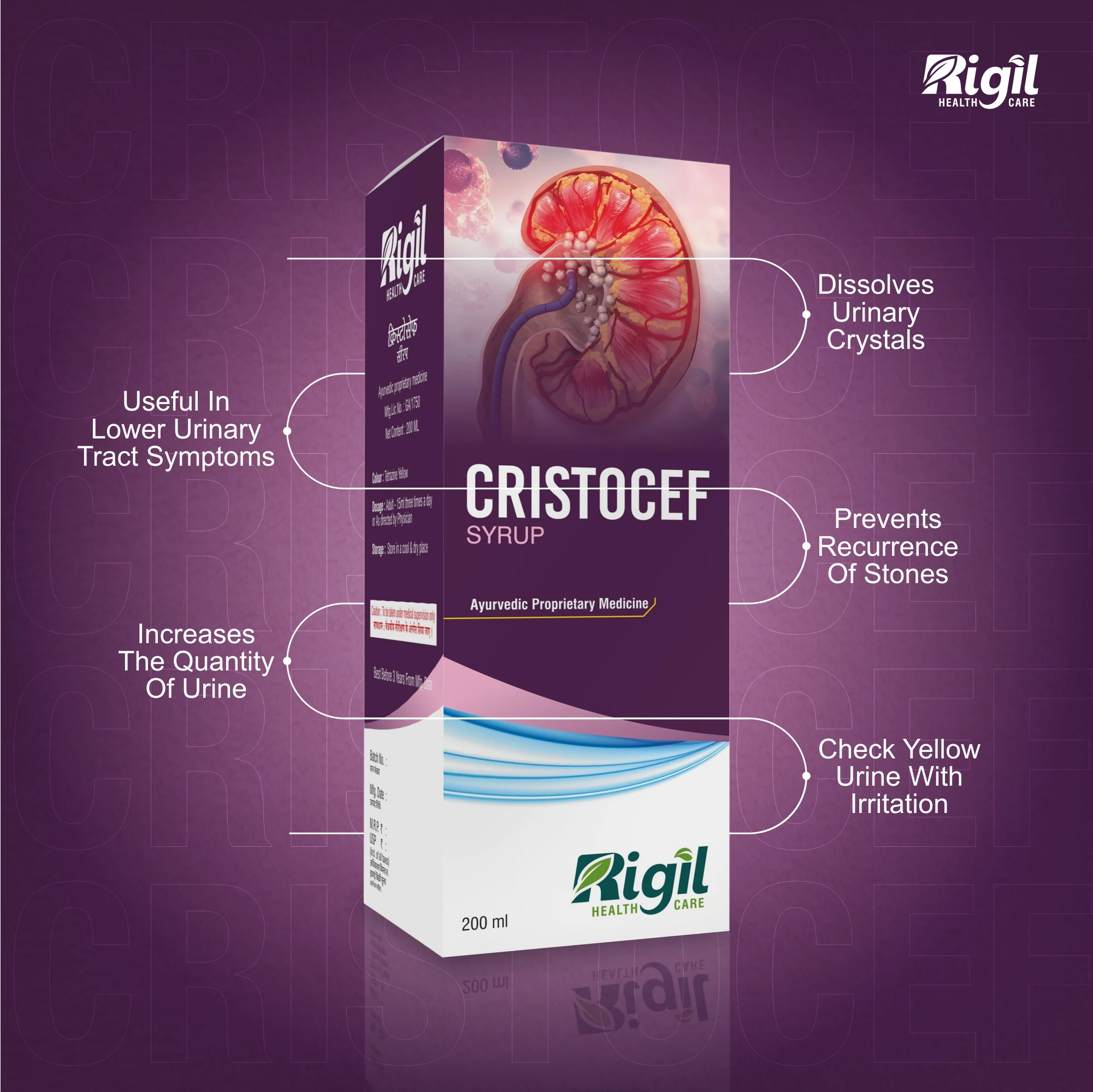
- Breaks down kidney stones for easy passage.
- Eases pain and swelling from kidney stones.
- Soothes painful or burning urination.
- Helps prevent the formation of new stones, supporting urinary health.
- Reduces yellow urine and irritation.
- Works as an adjuvant to antibiotics for UTIs.
- Made with ayurvedic herbs like Goukharu, Pashanbheda, Punarnava, and others.
Description
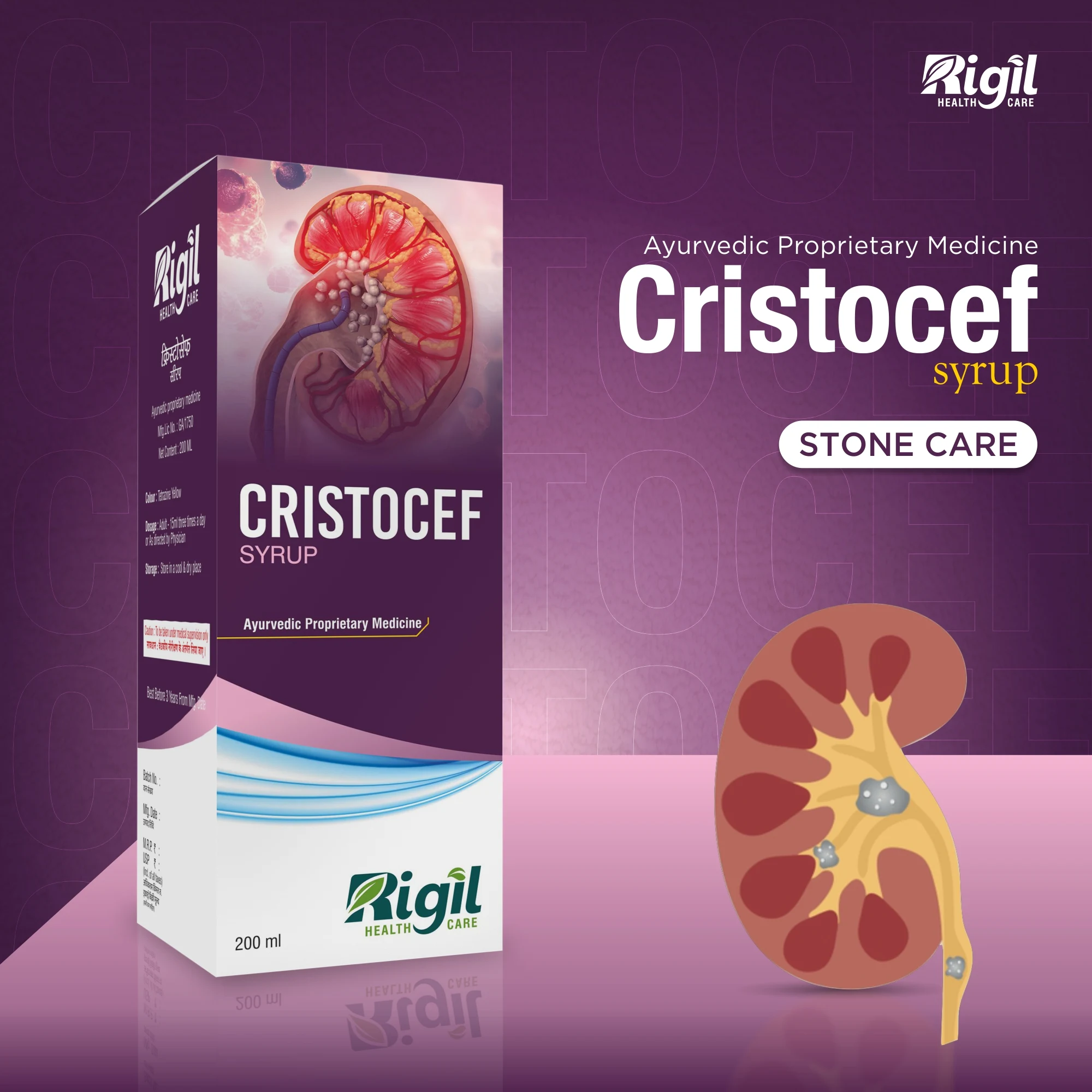
Cristocef Syrup – An Urinary Crystals Care (Stone Care)
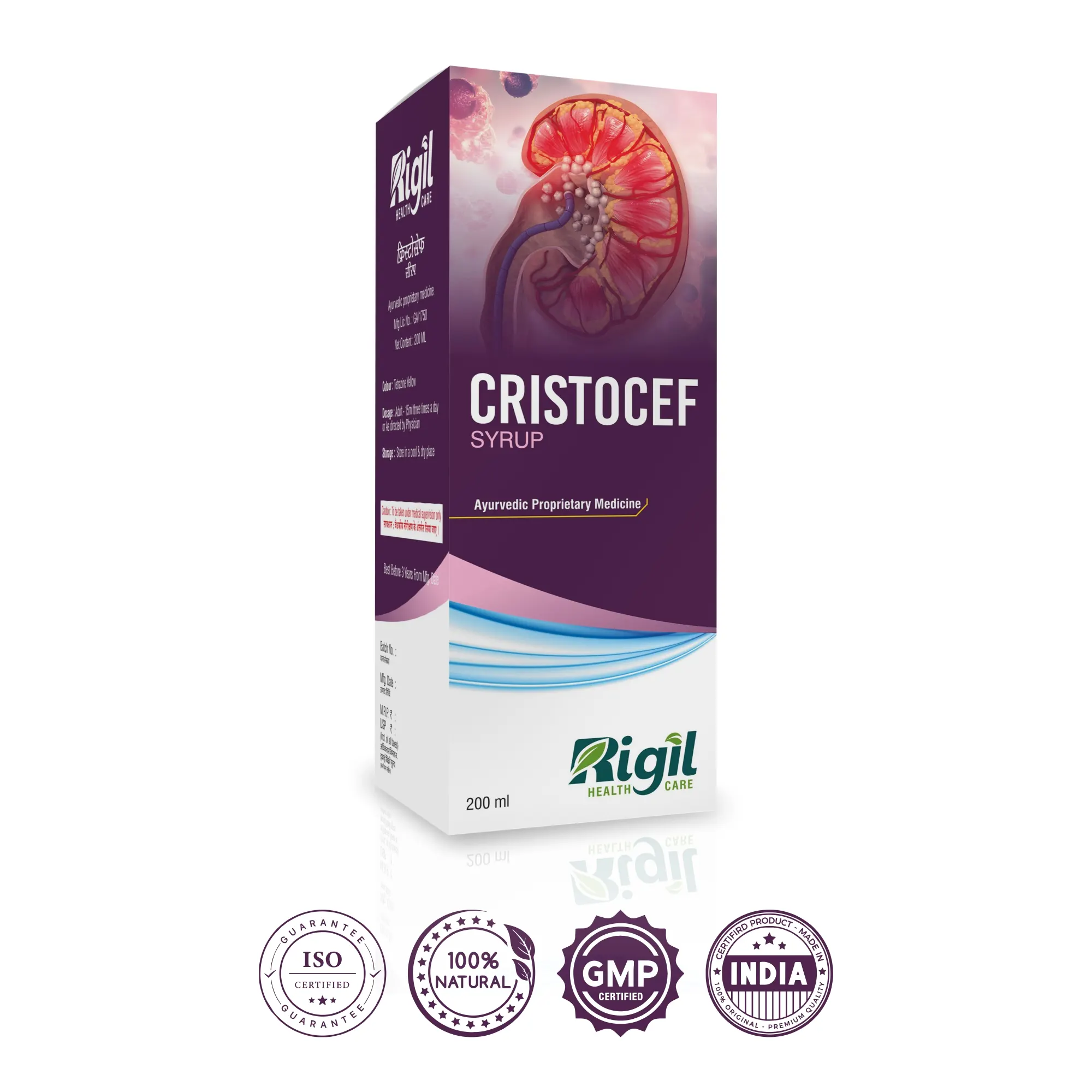
Cristocef Syrup is an Ayurvedic herbal formulation containing Gokhru, Pashanbheda, Punarnava and traditional Ayurvedic ingredients. It is formulated to support general urinary wellness and is intended for use according to the product label or guidance from a qualified healthcare professional.
What is Cristocef Syrup?
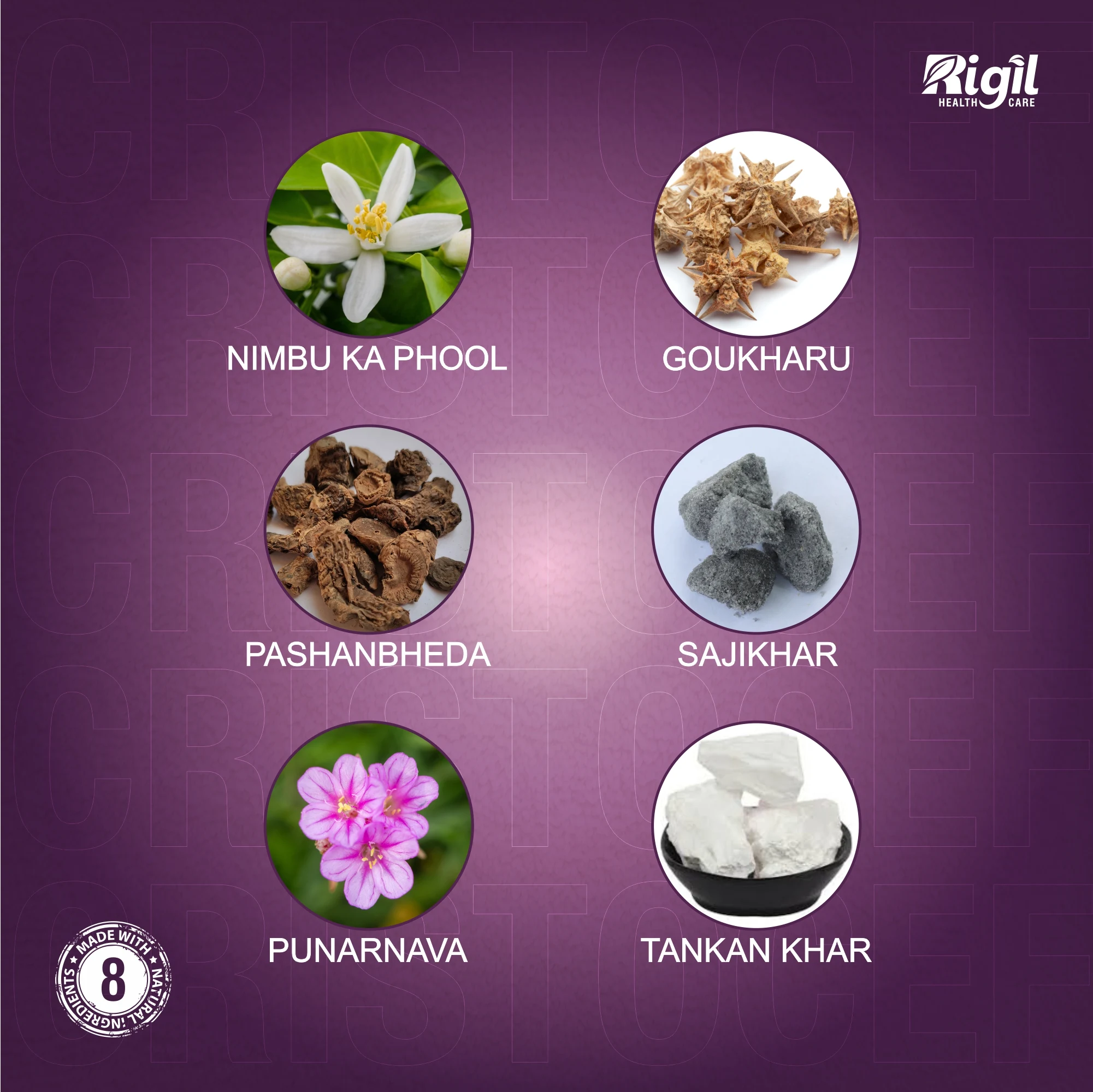
Cristocef Syrup is an Ayurvedic herbal formulation containing Gokhru, Pashanbheda, Punarnava, Tankan Khar, Sajikhar, Yavakshar, Mulakshar and Nimbu ka Phool.
These ingredients are traditionally used in different Ayurvedic formulations associated with urinary care and general wellness.
Cristocef should not be presented as a guaranteed treatment for kidney stones, urinary infections or other diagnosed urinary disorders.
Effective In
- Ayurvedic herbal syrup formulation
- Contains Gokhru, Pashanbheda, and Punarnava
- Includes traditional Ayurvedic mineral/alkaline ingredients
- Formulated for urinary wellness support
- Suitable use should follow the product label or professional advice
Syrup Compositions:
| SR | INGREDIENT | QUANTITY | Traditional Context |
| NO. | Each 10ml. contains | ||
| 1 | Goukharu (Tribulus terrestris) Fruit | 300 mg. | Traditionally used in Ayurvedic urinary-care preparations |
| 2 | Pashanbheda (Colesus aromaticus) Root | 300 mg. | Traditional urinary-care formulation ingredient |
| 3 | Punarnava (Boerhaavia diffusa) Root | 300 mg. | Traditionally used in Ayurvedic urinary wellness preparations |
| 4 | Tankan Khar | 150 mg. | Traditional Ayurvedic formulation ingredient |
| 5 | Sajikhar | 100 mg. | Traditional alkaline Ayurvedic ingredient |
| 6 | Yavakshar | 100 mg. | Traditional Ayurvedic formulation ingredient |
| 7 | Mulakshar | 100 mg. | Traditional Ayurvedic formulation ingredient |
| 8 | Nimbu ka phool (Citrus acida) | 50 mg. | Traditional formulation ingredient |
| Aqueous Syrup Base | Q.S. | Syrup base |
Tips:
- Drink plenty of fluids.
- Avoid caffeine and alcohol.
- Eat a healthy diet that is low in salt and sugar.
- Get regular exercise.
Dosages: 2 Teaspoonful 3 to 4 Times a day, or as directed by the physician
Kidney Stones and Urinary Health
Kidney stones can differ in size, location and composition. Some stones may pass naturally, while others can cause obstruction or require medical treatment.
Symptoms may include side or back pain, painful urination, blood in urine, nausea or changes in urinary frequency.
Cristocef Syrup should not be considered a substitute for diagnosis or medically indicated treatment of kidney stones.
Safety & Precautions
- For use according to the product label or qualified healthcare professional’s advice.
- Do not exceed the recommended dosage.
- Consult a healthcare professional if you have kidney disease, urinary obstruction or another diagnosed urinary condition.
- Consult a professional before use if you take prescription medicines or have other ongoing health conditions.
- Pregnant or breastfeeding individuals should seek professional advice before use.
- Do not use the syrup as a replacement for prescribed treatment for urinary infection or kidney stones.
- Seek prompt medical attention for severe pain, fever, chills, vomiting, blood in urine or difficulty passing urine.
- Stop use and seek professional advice if an unexpected or significant reaction occurs.
- Keep out of reach of children.
What Does Scientific Research Say?
Some ingredients used in Cristocef, including Tribulus terrestris, Boerhaavia diffusa and other traditional Ayurvedic ingredients, have been investigated in preclinical or clinical research related to urinary and renal health.
However, evidence concerning an individual ingredient does not automatically establish that the finished Cristocef Syrup dissolves kidney stones, prevents recurrence or treats urinary infections.
The evidence should therefore be presented according to the specific ingredient, preparation, dosage and study design.
Cristocef Syrup FAQs
What is Cristocef Syrup used for?
Cristocef Syrup is an Ayurvedic formulation intended to support general urinary wellness.
What are the ingredients in Cristocef Syrup?
It contains Gokhru, Pashanbheda, Punarnava, Tankan Khar, Sajikhar, Yavakshar, Mulakshar and Nimbu ka Phool.
Can Cristocef Syrup dissolve kidney stones?
The product should not be presented as a proven stone-dissolving treatment. Kidney stones vary in type and size and may require professional evaluation and treatment.
Can Cristocef prevent kidney stones from coming back?
Do not claim that it prevents recurrence unless appropriate finished-product evidence supports that claim. Stone prevention depends partly on the type and cause of the stone.
Can Cristocef Syrup be used for UTI?
Urinary infections may require specific medical treatment. Cristocef should not be presented as a replacement for prescribed treatment for a UTI.
Can it help with burning urination?
Burning urination can have several causes. Persistent or severe symptoms should be evaluated by a qualified healthcare professional.
How should Cristocef Syrup be taken?
Follow the verified product label or take it as directed by a qualified healthcare professional.
Key Takeaways
- Cristocef is an Ayurvedic herbal syrup for urinary wellness support.
- It contains Gokhru, Pashanbheda, Punarnava, and other traditional Ayurvedic ingredients.
- It is intended to support general urinary care.
- Kidney stones and urinary infections can require proper diagnosis and treatment.
- Severe pain, fever, blood in urine, or difficulty passing urine require prompt medical evaluation.
- Cristocef should not be positioned as a guaranteed stone-dissolving, stone-prevention, or UTI treatment.
Written by: Rigil Healthcare Editorial Team
Last Updated: Sep 2026